Navigating Sustainably in Stormy Waters: Economic Risks in Fisheries and the Role of Income Diversification and Governance
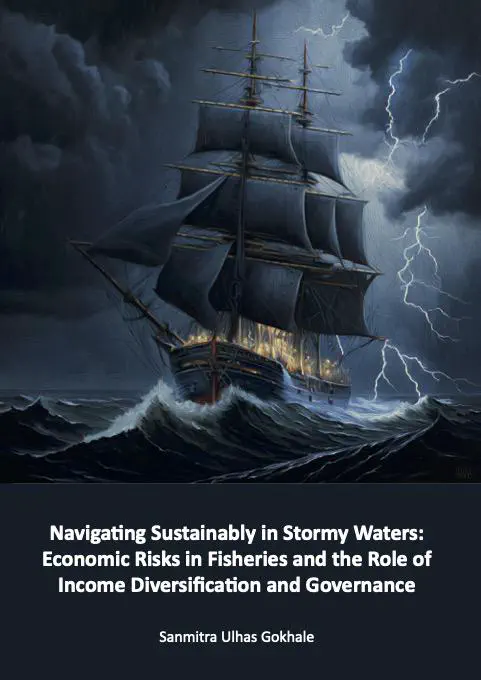
Sanmitra's dissertation investigates how economic risks in fisheries are managed at both the individual and national scale. Using empirical analyses of Nordic fisheries, Sanmitra examines how fishers reduce income risk by diversifying their income sources, including non-fishing employment and partner income. The findings show that diversified income portfolios can significantly reduce household income volatility, highlighting the importance of secondary income sources for fishers’ economic resilience. At the national scale, Sanmitra analyzes the effects of fishing subsidies on fish stock health and finds evidence that subsidies can positively influence stock status. The dissertation also explores how global seafood trade creates telecoupled fisheries systems, in which changes in one major fish stock, such as North-East Arctic cod, affect global prices, catches, and fishing behavior in distant regions. Together, Sanmitra's results demonstrate that fisheries risk management depends not only on local decision-making but also on global market dynamics and governance policies.

Sanmitra Gokhale
Sanmitra’s research focuses on economic risk management in fisheries, including income diversification, fisheries governance, and the impacts of global seafood markets on fishing communities.