Crossing Borders at the Grensmaas

What happens when you give a river back its room? Along the Grensmaas, the stretch of the Meuse that forms the border between the Netherlands and Belgium, the largest river restoration project in the country turned gravel pits and dikes into a wilder river that floods more safely, brings nature back and attracts new residents. Crossing Borders at the Grensmaas (NWO, Living Labs in the Dutch Delta, 2020–2026), led by Andries Richter at Wageningen University, used this unique experiment to ask a simple but hard question: what makes a nature-based solution a success, and for whom?
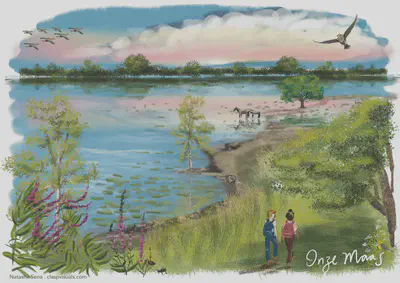
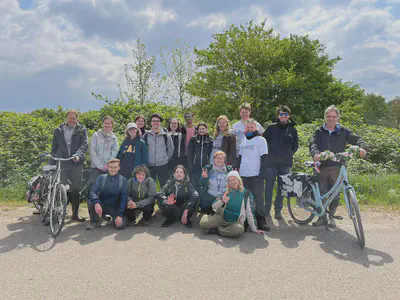
For six years, ecologists, economists and social scientists from Maastricht University, Wageningen University, Delft University of Technology, the University of Twente and Hanze University of Applied Sciences worked side by side with residents, river managers and local partners. They followed fish, plants and insects returning to the restored floodplains, measured how flood risk and the new river landscape show up in house prices, tested whether better information changes how households prepare for floods, and listened to the stories people tell about their river. The answers are encouraging but not simple: nature recovers, the project creates lasting value, yet trust, fairness and whose voice counts turn out to matter as much as ecology and economics. That lesson, the difference between success in outcomes and success in process, is at the heart of the Living Lab’s legacy.
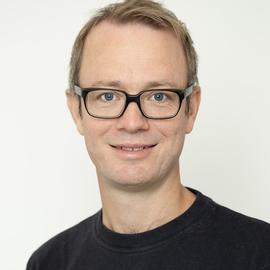
Andries Richter
Associate Professor
Andries’s research focuses on the economics of social–ecological systems, using theoretical models, causal empirical methods, and economic experiments to understand how institutions and human behavior affect the sustainable management of natural resources.

Sofia Badini
Sofia’s research focuses on climate adaptation, environmental risk perception, and the role of policy and institutions in shaping human responses to environmental change.

Anna Lou Abatayo
Associate Professor
Anna’s research is on ex-ante and ex-post evaluation of environmental policies through economic experiments and impact evaluation methods.