NAT: Nature-Based Sandy-Soil Landscapes
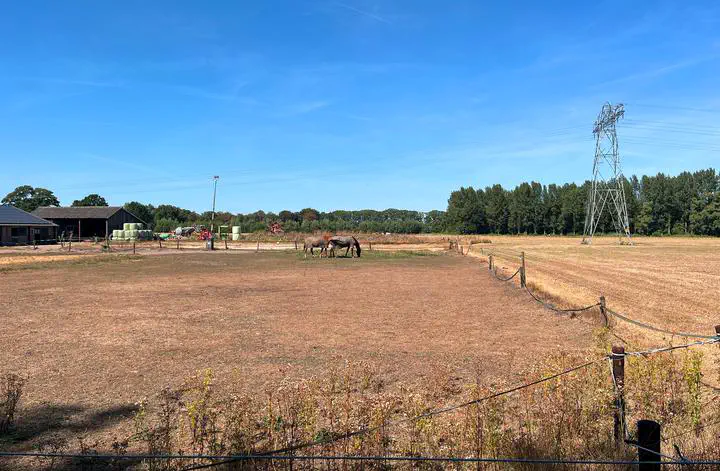 The countryside near Deventer during the 2026 drought. Photo: Max Augustijn
For centuries, the Dutch sandy-soil landscapes have been adapted to our needs through drainage and fertilization, rather than the other way round. Today, intensive agriculture, drainage-focused water management and groundwater extraction leave these regions vulnerable to drought, just as climate change brings drier summers and heavier rainfall. NAT (Nature-based approaches for climate-robust, sustainable and productive sandy-soil landscapes; NWO, 2023–2029) turns this around: together with experts and stakeholders, it designs future landscapes in which land use follows local soil and water conditions, and maps out the pathways to get there.
Within NAT, EconSES leads the socio-economic and legal work. Our research asks how land and water use can be aligned with natural conditions while remaining economically viable and socially acceptable, with a focus on drought and on how water law, policy and governance can enable or block the transition to nature-based landscapes.
Andries Richter
Associate Professor
Andries’s research focuses on the economics of social–ecological systems, using theoretical models, causal empirical methods, and economic experiments to understand how institutions and human behavior affect the sustainable management of natural resources.
Max Frederik Wicher Augustijn
Max’s research examines how economic, legal, and social factors shape nature-based transitions for climate-resilient landscapes, drawing on an interdisciplinary background in psychology, business, design, and spatial planning.