OceanSOS: A Safe Operating Space for the Deep and Open Ocean
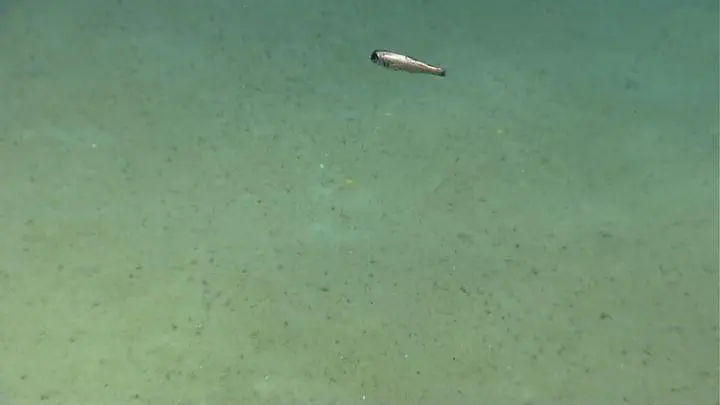 A lanternfish at around 800 m depth in the canyons off the northeastern United States. Image courtesy of the NOAA Okeanos Explorer Program, 2013 Northeast U.S. Canyons Expedition
Between 200 and 1,000 metres below the surface lies the twilight zone, home to what may be the largest fish biomass on Earth. Every night, lanternfish, squid and jellies migrate towards the surface to feed and return to the depths by day, carrying carbon into the deep ocean and helping to regulate the climate. With fish stocks closer to shore under pressure, this vast and barely known resource is attracting interest from a new kind of fishery: mesopelagic fishing for fishmeal, fish oil and food. OceanSOS (Horizon Europe, 2026–2030) brings together 14 international partners to define a Safe Operating Space for the deep and open ocean: science-based limits for human activities in the high seas that allow precautionary management before critical tipping points are crossed.
How close is too close? A safe operating space only works if people agree on where the limits lie and accept what it costs to respect them. EconSES studies the human side of these limits: who gains and who bears the risks when climate change, existing fisheries and future mesopelagic fishing combine, and how the costs and benefits are shared between communities and generations. Large-scale surveys reveal how the public weighs these trade-offs, from food and jobs to climate and biodiversity, and how much support there is for precautionary limits. This helps turn scientific thresholds into a safe operating space that is not only ecologically sound but also socially legitimate.
Andries Richter
Associate Professor
My research focuses on the economics of social–ecological systems, using theoretical models, causal empirical methods, and economic experiments to understand how institutions and human behavior affect the sustainable management of natural resources.