REPIN: Risk, Preferences and Investment in Norwegian Fisheries
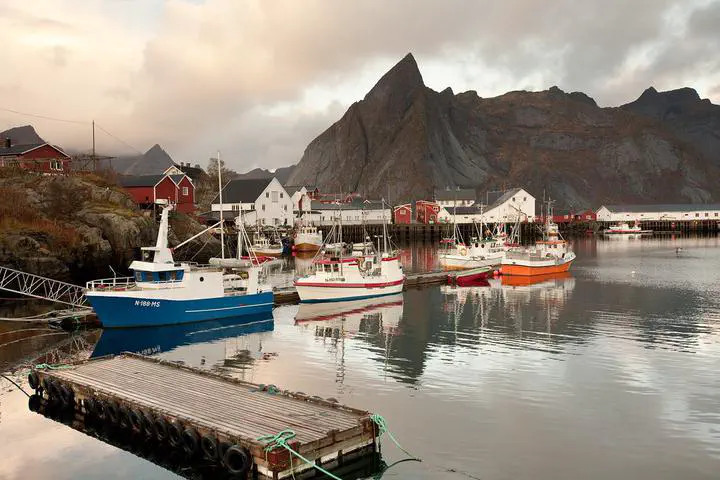 Fishing boats in the harbour in Lofoten, Norway, 2013. Photo: Lawrence Hislop, GRID-Arendal
Economic models of fisheries rest on assumptions about how fishers deal with risk and the future, yet these attitudes are rarely measured. REPIN (Risk, Endogenous Preferences, and Investment Behavior in Norwegian Fisheries; Research Council of Norway, 2013–2015) set out to change that. The project asked how fishers’ preferences toward risk, time and fairness differ from those of the wider population, where these preferences come from, and how they shape key decisions such as investing in a vessel, entering or leaving the fishery, and following the rules. Do people who are willing to take risks choose to become fishers, or does a life at sea change how people think about risk?
To find out, REPIN combined a nationwide survey of Norwegian fishers and a control group of non-fishers with incentivised experiments, in which participants made real choices with real money at stake.

Andries Richter
Associate Professor
My research focuses on the economics of social–ecological systems, using theoretical models, causal empirical methods, and economic experiments to understand how institutions and human behavior affect the sustainable management of natural resources.